














 From 150₾ Free Shipping
 Categories
 Sale
Sale
 profile
Bathroom Cleaning Supplies: Complete Guide for Businesses | Supta.ge


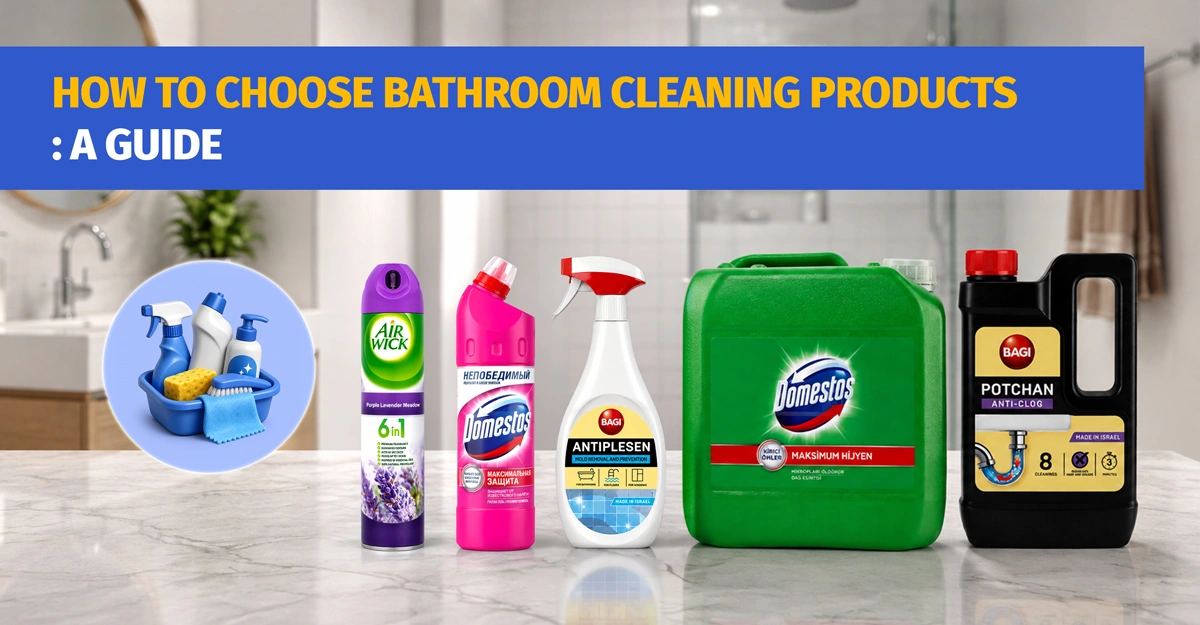
Restroom cleanliness is not only a visual concern for a business. It is connected with hygiene, employee and customer comfort, and the overall standard of the workplace. For this reason, selecting the right bathroom cleaning supplies and keeping them consistently available is an important part of daily operations.
A single universal product is not enough for complete restroom care. Different surfaces and tasks require different solutions, including bathroom and toilet cleaners, drain cleaners, soap, air fresheners, disinfection products and appropriate cleaning equipment.
This guide explains what businesses should consider when selecting bathroom-care products, how to group supplies by function and how to manage hygiene inventory more consistently.
Bathroom Cleaning Supplies and Hygiene Standards for Businesses
Restroom maintenance in a business environment combines several tasks: surface cleaning, hand hygiene, odour control, drain and plumbing care, and maintaining sufficient consumable stock.
For this reason, it is useful to plan the entire system instead of purchasing individual products without a structure. Businesses can begin with the wider Cleaning and Disinfectants category, while products specifically intended for restrooms are grouped under Bathroom Care.
Related product groups include soap, air fresheners, drain cleaners and other everyday hygiene supplies. Organizing procurement by function makes it easier to identify what is required and reduce the risk of overlooking an important part of restroom maintenance.
What Products Are Needed for Complete Restroom Care?
Bathroom and Plumbing Cleaners
Toilets, sinks, taps, ceramic surfaces and other bathroom fixtures accumulate different types of dirt and deposits. When selecting a cleaner, check which surfaces the product is intended for and what type of contamination it is designed to remove.
Acidic or strong chemical products are not suitable for every surface. Always follow the manufacturer's instructions and never mix different cleaning chemicals unless the product instructions specifically state that this is safe.
Businesses can compare bathroom-care products from brands such as Bagi, Grass and Domestos, then select the product according to the specific surface and cleaning task.
Soap and Hand Hygiene
Soap is one of the essential consumables in a restroom. When comparing solid and liquid soap, consider the number of users, frequency of use and the dispenser system installed in the facility.
In shared restrooms, liquid soap used with a dispenser can be a practical option because the product remains inside a closed container and can be dispensed in controlled portions.
For additional hand-hygiene requirements, businesses can also review disinfection products. Always use each product according to its stated purpose and manufacturer instructions.
Air Fresheners and Restroom Comfort
In addition to cleaning, odour control is important in shared restrooms. Air aerosols and fresheners can be used as an additional part of restroom maintenance.
A fragrance product does not replace cleaning. Sources of dirt and unpleasant odours should be addressed first, while air fresheners can be used afterwards to improve comfort in an already clean environment.
How to Choose a Drain Cleaner
Drain and pipe maintenance is also part of keeping a restroom functional. Drain cleaners differ in formulation, physical form and intended use.
Some products are liquid while others are supplied as granules. Instructions, contact times and compatibility with different pipe materials can vary. Before using a product, always check the label for dosage, suitable materials, application time and safety instructions.
Strong cleaning chemicals should never be mixed with one another unless the manufacturer explicitly permits it. Staff should also use any protective equipment required by the product instructions.
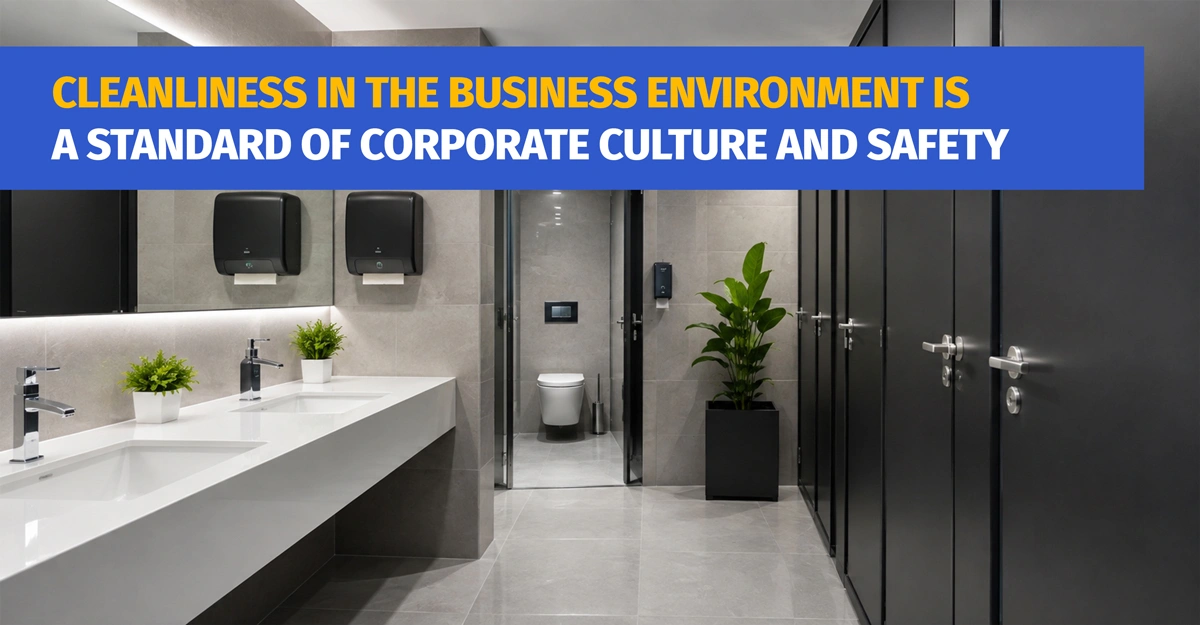
Dispensers and Consumable Control
Dispensers play an important role in managing soap and other hygiene consumables.
A correctly selected dispenser helps make usage more consistent while protecting the consumable from unnecessary handling and contamination.
Different mechanisms are used for liquid soap, paper towels and other hygiene products, so the dispenser must be compatible with the format and dimensions of the consumable placed inside it.
For more practical guidance on dispensers and workplace hygiene, visit the Supta.ge blog.
Professional or Household Cleaning Products?
The labels “professional” and “household” do not automatically mean that one product is always better than the other. The appropriate option for a business depends on the facility size, cleaning frequency, number of users, package volume and recommended dosage.
A larger package or concentrated product may be practical for a large office, hotel or food-service facility if its dosage and intended use fit the cleaning process.
For a smaller office, a lower-volume ready-to-use product may be more convenient. Compare package size, dosage and actual consumption rather than focusing exclusively on unit price.
Bathroom Care for Different Types of Businesses
Offices
In offices, the main priorities are routine cleaning, hand hygiene, paper consumables and timely restocking. Cleaning and inspection frequency should reflect the number of users.
HoReCa
In HoReCa facilities, restrooms are often high-traffic areas. Easy-to-refill dispensers, sufficient consumables and a defined cleaning routine become particularly important.
Medical and Aesthetic Facilities
In medical and aesthetic facilities, restroom maintenance should be aligned with the organization's internal hygiene and infection-control procedures. Products should only be used for the purposes stated on their labels and instructions.
How to Plan Bathroom-Care Inventory
The most useful starting point for inventory planning is the facility's actual consumption. Track how much soap, paper products, cleaning solution and air freshener are used each week or month.
Buying Bathroom Cleaning Supplies on Supta.ge
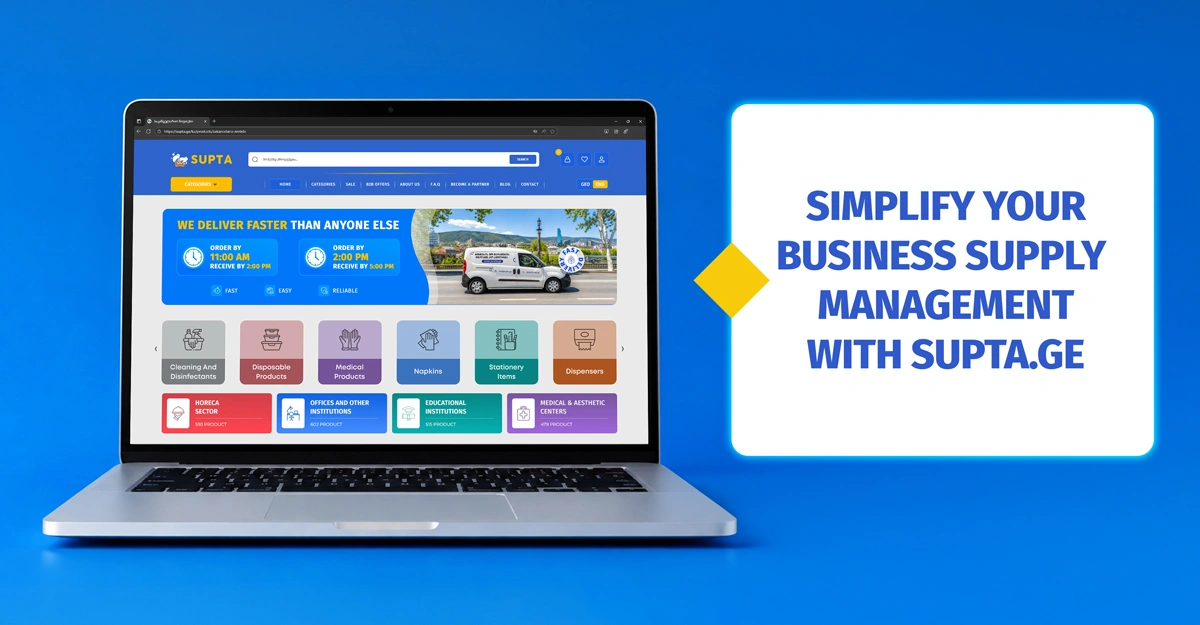
On the Supta.ge business supply platform, companies can purchase bathroom cleaning supplies, soap, drain cleaners, air aerosols, dispensers and other hygiene products in one place.
For wider facility maintenance, businesses can also explore interior and furniture cleaning products and cleaning cloths and sponges.
Browse the complete product catalogue to review all available categories.
Businesses requiring recurring or high-volume supplies can explore Supta.ge partnership opportunities. For assistance with a product or category, contact the Supta.ge team.
Orders in Tbilisi can be delivered within 2–3 working hours. Choosing products according to the actual cleaning task and managing stock based on real consumption helps businesses maintain restrooms in a more organized and consistent way.
Article by:
Supta.ge
Georgia’s N1 business supply platform — everything in one place.
How to Choose Floor Cleaning Liquids?

Disposable Containers for Businesses: How to Choose the Right Ones in 2026
Medical Disposable Supplies: A Guide to Quality Selection
How to Choose the Best Cleaning Products for Furniture
Disinfectants: A Complete Guide for Businesses
Dispenser Consumables: An Efficient Supply Guide for Businesses
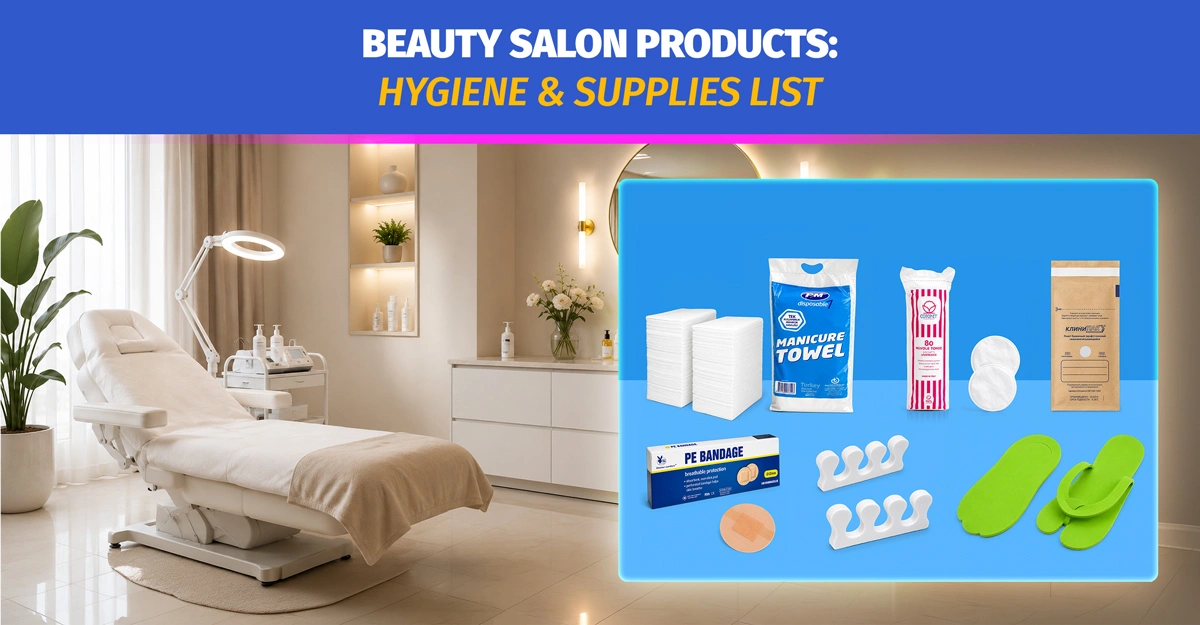
Beauty Salon Products: Hygiene and Supplies List
See all